
What is flu?

child-with-fever child-with-fever

What is flu, or influenza?

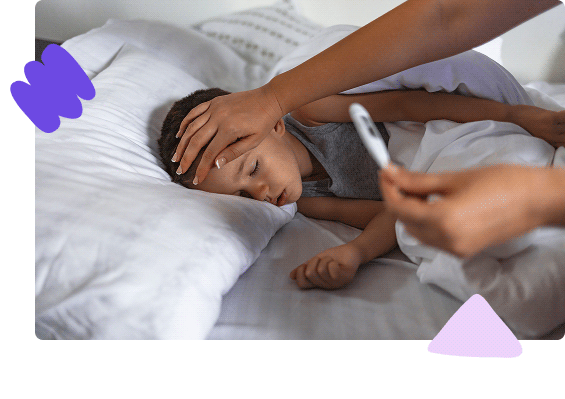
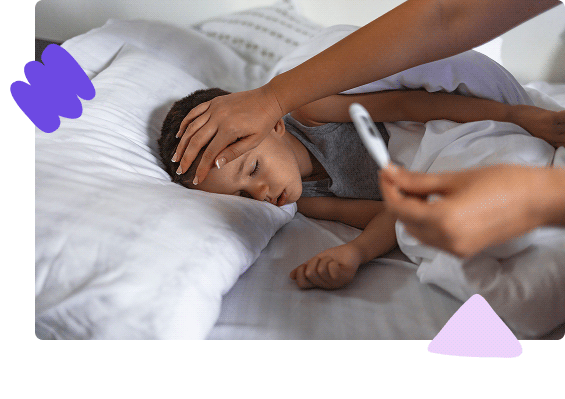
Flu is a virus that is easily spread between people, generally between December and March, and it affects the airways and how people can breathe.1 It can be pretty unpleasant for kids; ask someone who has had it, it is generally worse than a common cold.1,2

It can take a week or so for kids and teenagers to get over the flu, so there’s a good chance they’re going to miss out on school or nursery; this means parents or carers may have to take time off work.3 Also, for most, it is pretty mild, but for others it can get a bit serious; complications can be bronchitis and pneumonia, and in a small number of cases flu can cause people to die.4

Some groups are especially vulnerable to the flu, such as adults over 65, young children, and people with pre-existing medical conditions.5,6 In fact, a child under five is over 5 times more likely to have to go to hospital with the flu than those over 65.6

There are many things people can do to help reduce the impact of the flu on themselves and their children. One of these things is a flu vaccine; this can boost a child’s immunity and help prevent illness in themselves, their family, friends, and the rest of the community.7


child-with-fever child-with-fever

How is flu spread?

There are two main strains of the flu, or influenza, virus – imaginatively titled A and B – that commonly cause illness in people, with A as the most common and to blame for the recent flu epidemics we’ve had (although we still see some cases of B).8 These virus strains change and evolve all the time, that is why a new vaccine is needed every year. It’s also why children are offered a vaccine every year; it is the best way to help protect them with the vaccine from flu.8,9

The flu spreads easily, especially amongst children, who regularly come into close contact with family and other children from nursery or school, their clubs and activities.9,10 The easy spread of flu amongst children can result in the missing out of activities and school.10

Flu spreads when someone coughs or sneezes and tiny droplets containing the virus are spread into the air, and it can be transmitted up to one metre, so anyone standing nearby can breathe in the virus.9 It can also be spread through physical contact with someone who has the flu so get washing those hands!9

The time from infection to illness is usually two days, but can range from one and four days.9 Most children recover from flu within a week; however, it is possible for them to feel tired for up to three or four weeks.11 Read more about the symptoms of flu by pressing next.

Survey data from 2003 UK parents revealed:12

2/3 children forget to wash their hands

55% pick their noses

48% don’t cover their mouths when coughing

More information

Father holding and comforting toddler daughter who is ill Father holding and comforting toddler daughter who is ill

Want to learn more about how to prevent flu?

Explore how the symptoms of flu can present in children of different ages and how to prevent infection

Father looking after toddler son blowing nose Father looking after toddler son blowing nose

How serious is flu?

Learn more about how flu can have a serious impact to children

Head over to the FAQs for the most commonly asked questions surrounding flu and the nasal spray vaccine

  1. Nidirect Government Services. Flu | nidirect. www.nidirect.gov.uk. Published October 19, 2017. Accessed: July 2024. Available at: https://www.nidirect.gov.uk/conditions/flu
  2. CDC. Cold Versus Flu. Centers for Disease Control and Prevention. Published 2019. Accessed: July 2024. Available at: https://www.cdc.gov/flu/symptoms/coldflu.htm
  3. NHS Inform. Flu. Accessed: July 2024. Available at: https://www.nhsinform.scot/illnesses-and-conditions/infections-and-poisoning/flu#:~:text=The%20symptoms%20of%20flu%20usually,a%20further%20couple%20of%20weeks
  4. CDC. Flu Symptoms & Complications. Centers for Disease Control and Prevention. Published April 26, 2019. Accessed: July 2024. Available at: https://www.cdc.gov/flu/symptoms/symptoms.htm
  5. CDC. People at High Risk For Flu Complications. Centers for Disease Control and Prevention. Published August 27, 2018. Accessed: July 2024. Available at: https://www.cdc.gov/flu/highrisk/index.htm
  6. Cromer D et al. J Infect. 2014 Apr; 68 (4): 363-71.
  7. UKHSA. Flu vaccination programme 2023 to 2024: briefing for primary schools. GOV.UK. Published 2023. Accessed: July 2024. Available at: https://www.gov.uk/government/publications/flu-vaccination-in-schools/flu-vaccination-programme-2021-to-2022-briefing-for-schools
  8. CDC. Types of Influenza Viruses. Centers for Disease Control and Prevention. Published November 2, 2021. Accessed: July 2024. Available at: https://www.cdc.gov/flu/about/viruses/types.htm
  9. WHO. Influenza (Seasonal). Who.int. Published January 12, 2023. Accessed: July 2024. Available at: https://www.who.int/news-room/fact-sheets/detail/influenza-(seasonal)
  10. UKHSA. The importance of vaccination children against flu. Accessed: July 2024. Available at: https:/ukhsa.blog.gov.uk/2020/11/02/the-importance-of-vaccinating-children-against-flu/
  11. Johns Hopkins Medicine. Influenza (Flu) in Children. Influenza (flu) in Children. Published 2017. Accessed: July 2024. Available at: https://www.hopkinsmedicine.org/health/conditions-and-diseases/influenza/influenza-flu-in-children
  12. AstraZeneca UK Ltd. Data on File. REF-241689. September 2024.

GB-67895 | September 2025